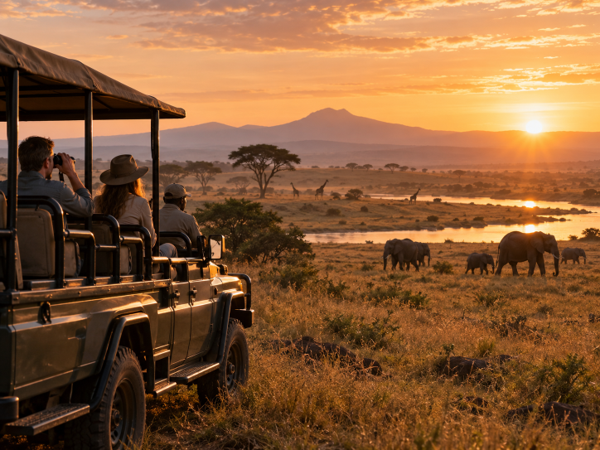
For most first-time travellers, five to seven safari days is the useful minimum, and seven to ten days is the sweet spot if you want more than one ecosystem without rushing.
Three days can still produce a very good safari, especially if you choose one destination and stay there. What usually goes wrong is not having too few days. It is spending too many of those days moving.
A four-night trip concentrated in two well-chosen places can be better than a seven-night itinerary that changes lodge every morning.

Count nights, not just brochure days
Safari itineraries are often marketed by days, but nights give you a more honest picture of how much wildlife time you are buying.
A “three-day safari” may mean:
• Day 1: drive from Nairobi, arrive after lunch, evening game drive
• Day 2: full safari day
• Day 3: morning game drive, then drive back to Nairobi
That can be excellent if all three days revolve around the Masai Mara. It is not three full days of wildlife viewing.
The same principle applies to longer trips. A seven-day itinerary with four long transfers can contain less actual safari time than a five-day fly-in trip based in one or two areas.
Before you compare itineraries, look at how many mornings and evenings you will actually spend inside wildlife areas.
Three days: one park, done properly
A three-day safari works best when the destination is the point of the trip rather than one stop in a wider circuit.
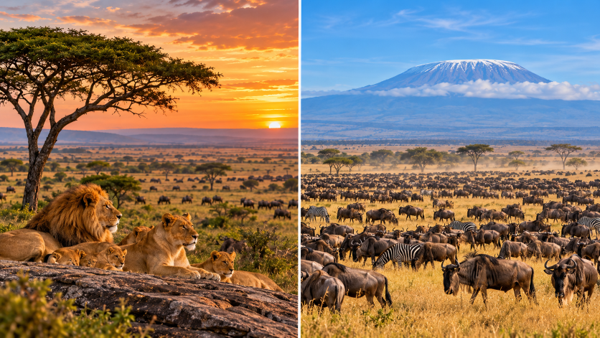
For a first visit, the Mara is the obvious candidate. Two nights give you an arrival game drive, a full day and a final morning. If you fly rather than drive, you can recover even more usable time.
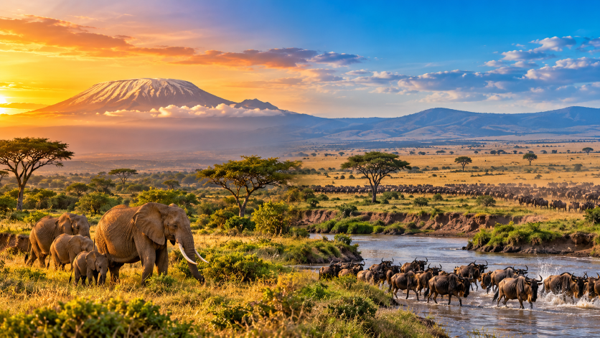
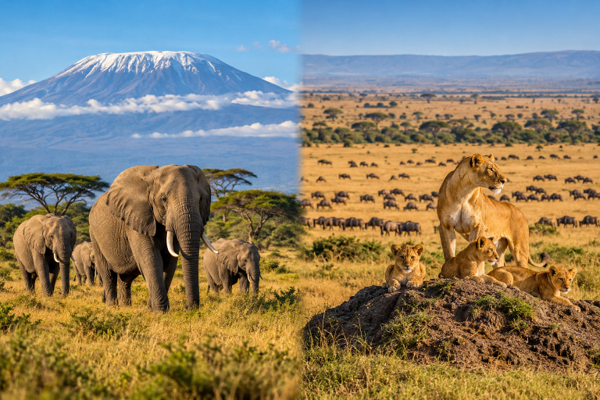
Three days can also work in Amboseli National Park if elephants and Kilimanjaro are the priority. The shorter road connection from Nairobi makes it easier to build around a limited schedule.
What we would not do is try to split three days between the Mara and Amboseli, or between three different parks. You would spend too much of your trip checking in, checking out and watching the road.
Best for: short extensions, business travellers adding a safari, repeat visitors, or travellers who know exactly which park they want.
Five days: enough for two distinct experiences
Five days is where a first Kenya safari begins to feel complete.
You have time for two main stops, particularly if they connect logically. Examples include:
• Amboseli + Lake Naivasha for elephants, scenery and a Rift Valley break
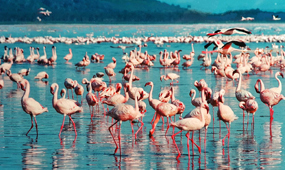
• Lake Nakuru + Masai Mara for rhino, birds and big-cat country
• Naivasha + Masai Mara for water-based activities followed by deeper wildlife time
• Ol Pejeta/Laikipia + Masai Mara for conservancy experiences and the Mara
Fania's 5 Days Kenya Encounter Wildlife Safari combines Ol Pejeta, Nakuru and the Mara, while the 5 Days Mid-Range Kenya Safari follows an Amboseli, Naivasha and Mara route.
Five days can carry three stops, but you should understand the trade-off: each extra destination reduces the time you have to settle into the previous one.
For travellers who dislike packing every morning, two stops is usually the more satisfying choice.
Seven days: the best first-safari balance
Seven days gives you enough time to combine three contrasting areas without turning every second day into a transfer.
This is why one-week safaris are so common. You can give the most important destination three nights, use a smaller stop to break a longer route, and still have more than one full wildlife day.
Our preferred first-visit structure is:
Nairobi → Amboseli (2 nights) → Lake Naivasha (1 night) → Masai Mara (3 nights) → Nairobi
The route gives you elephants and Kilimanjaro, a slower Rift Valley interlude, then the deepest wildlife time in the Mara.
We set out the full logic in The 7-Day Kenya Safari We Recommend for a First Visit.
Fania also has several existing seven-day itineraries with different priorities. The 7 Days Classic Nairobi, Naivasha & Maasai Mara Itinerary keeps the circuit compact, while the 7-Day Nairobi, Laikipia & Maasai Mara Safari gives more emphasis to the conservancy experience. The Classic Kenya Safari – 7 Days combines Ol Pejeta with the Mara.
Best for: most first-time safari travellers, couples, families, photographers with limited leave, and anyone who wants variety without a long trip.

Ten days: enough time to add the north or the coast
Ten days changes the character of the trip.
You no longer have to choose between a classic southern/Rift Valley circuit and something more specialised. You can add Samburu National Reserve, Lewa Conservancy, Meru or a longer conservancy stay without sacrificing the Mara.
You also have room to slow down.
Instead of two nights everywhere, you can spend three nights in the Mara and three in another ecosystem. That matters because wildlife viewing improves when you stop treating every sighting as the last chance before departure.
Ten days also makes a bush-and-beach combination more realistic. A safari can end on Diani Beach or another part of the coast without the beach feeling like a rushed add-on.
Fania's 9 Days Treasures of the Wilderness and Beach is a good example of how an Amboseli, Naivasha and coast combination changes the rhythm of the trip.
Twelve to fourteen days: Kenya starts to feel like a country, not just a safari circuit
Two weeks gives you time to experience different parts of Kenya without measuring every day by game-drive hours.
You might combine northern Kenya with the Mara, add a coast stay, spend a night in Nairobi, include cultural experiences, or simply stay longer in fewer lodges.
This is also when private conservancies become easier to justify. You can spend several nights somewhere with walking, night drives or other activities, then move into a national reserve for classic vehicle-based game viewing.
A longer trip is particularly useful for photographers, multi-generational families and travellers who dislike early check-outs.
The extra days are not valuable because they let you add more pins to a map. They are valuable because they remove pressure from the pins already there.
What about Kenya and Tanzania together?
A combined East Africa safari deserves more time than many itineraries give it.
The Masai Mara and Serengeti National Park are part of the same ecosystem, but there is an international border between them. Border formalities, vehicle changes or flight connections add logistics that do not exist inside a single-country circuit.
Eight days is possible if the trip is tightly designed. Ten to fourteen days is far more comfortable.
Fania's 8 Days Splendor of Kenya & Tanzania is a compact cross-border option, while the 15 Days Heartland of Kenya & Tanzania Wilderness gives the route enough time to include Amboseli, Tarangire, Ngorongoro, Serengeti, the Mara and the Rift Valley.
If you are choosing between the two countries rather than combining them, read Kenya vs Tanzania for Your First Safari.
Your interests can change the ideal length
The “right” number of days is different for a birder, a family and a photographer.
Wildlife photographers
Photography benefits from repetition. You want several mornings in the same place because light, animal behaviour and weather change. A photographer can easily spend four nights in the Mara without feeling that the itinerary is slow.
Fania's 8 Days Kenya Spectacular Photography Safari combines Amboseli, Naivasha and the Mara, giving each location a different visual purpose.
Families with children
Long road days are more important than total trip length. Seven days with sensible transfers can be easier than five days packed with constant movement. Pool time, early dinners and the ability to shorten a drive can make the difference between a good family safari and an exhausting one.
Honeymooners
A honeymoon often benefits from fewer moves and better rooms. Three nights in two strong camps may be better than sleeping in four different lodges over the same period.
Birders
Birding rewards habitat variety. Longer itineraries through the Rift Valley, forests, arid north and coast can justify more stops because each move genuinely changes the species list.
Road or air can add or remove a day
A fly-in safari can turn a transfer day into a safari day.
Flights from Nairobi's Wilson Airport to major safari airstrips are short compared with road transfers, and Fania's charter services can be useful when a route or group size justifies them.
The trade-off is cost and luggage restrictions. Many safari flights operate with a 15 kg total allowance in soft-sided bags. For some travellers, that is easy. For photographers carrying multiple lenses or families travelling with young children, it needs to be planned carefully.
Our road safari vs fly-in safari comparison explains when the time saving is worth paying for.

Do not confuse “more days” with “better safari”
A badly routed ten-day trip can still feel rushed.
The clearest warning sign is a string of one-night stays. Another is a route that repeatedly doubles back through Nairobi. A third is adding a destination solely because it is famous, even though it does not fit the geography of the trip.
When we assess a safari, we look at the ratio between wildlife time and transfer time.
|
Safari length |
What works best |
What to avoid |
|
3 days |
One major park |
Trying to combine distant parks |
|
5 days |
Two main areas, or three compact stops |
One night everywhere |
|
7 days |
Three contrasting areas |
Four or five major parks by road |
|
10 days |
Classic circuit + north, conservancy or coast |
Adding destinations just because there is time |
|
12–14 days |
Deep Kenya trip or Kenya + Tanzania |
Moving every day |
Seven days can be enough for a first safari because Kenya's classic circuit works well from Nairobi. Ten days is better if your budget allows and you want a deeper experience. Three to five days is still worthwhile if you concentrate the trip instead of trying to imitate a longer itinerary.
A simple planning guide
If this is your first safari and you are still deciding where those days should go, start with our first safari in Kenya planning guide, then compare Masai Mara and Amboseli.
When your dates and trip length are fixed, browse Fania's Kenya destinations or ask us to build a tailor-made itinerary around the time you have rather than the number of parks you think you should see.