If we were planning a first Kenya safari for someone with exactly seven days, we would start with a simple rule: three distinct places are enough.
Our preferred road-based structure is:
Nairobi → Amboseli (2 nights) → Lake Naivasha (1 night) → Masai Mara (3 nights) → Nairobi
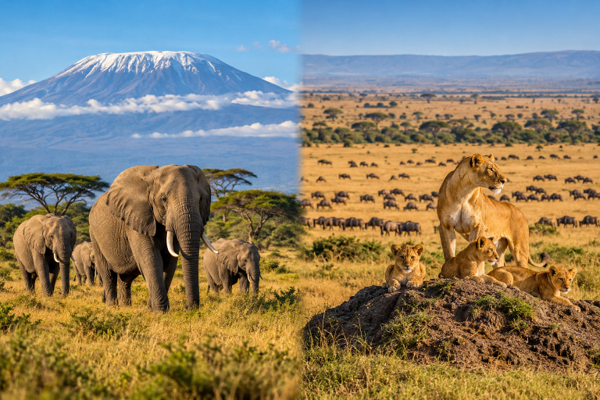
It is not the only good seven-day route in Kenya. It is the one we like for a first visit because every stop changes the experience. Amboseli gives you elephants and Kilimanjaro. Naivasha breaks the journey with water, birds and a slower afternoon. The Mara gets the most nights because it has the deepest wildlife viewing and deserves more than a quick stop.

Why we would not try to fit in more
It is easy to turn a seven-day safari into a checklist:
Amboseli. Nakuru. Naivasha. Mara. Samburu. Nairobi National Park.
The itinerary looks impressive. The road time does not.
Every lodge change carries friction: packing, check-out, loading the vehicle, driving, stopping for lunch, checking in, then trying to squeeze in an evening game drive before the light goes. One-night stays can be useful as deliberate route breaks, but a full week of them makes a safari feel as if it is always about to leave.
For a first visit, we would rather give the Masai Mara three nights than use one of those nights to add another destination simply because it is nearby on the map.
Day 1: Nairobi to Amboseli
Leave Nairobi after breakfast and head south toward Amboseli National Park.
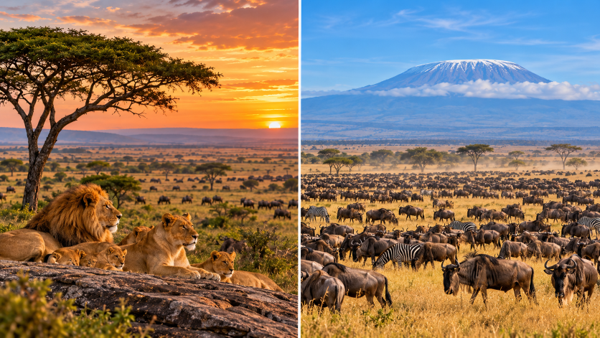
The landscape opens as you approach the Amboseli ecosystem. On a clear day, Kilimanjaro begins appearing long before you reach the park, although cloud cover is never predictable enough to promise the view.
After lunch and check-in, take an afternoon game drive.
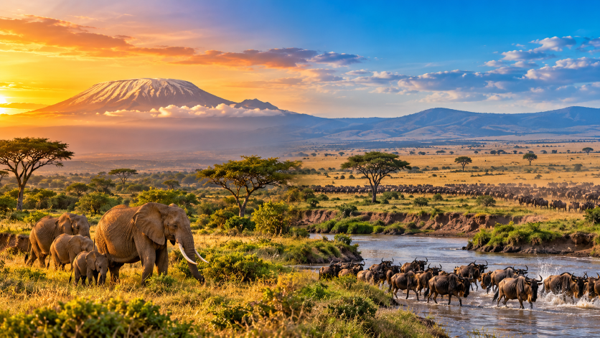
Amboseli works well as the opening stop because the wildlife is accessible without needing a long orientation period. The spring-fed swamps draw elephants, buffalo, hippo and birdlife, while open plains make it easier for first-time safari travellers to learn how to scan for animals.
Do not worry if Kilimanjaro is hidden in the afternoon. The mountain often gives its best chance early the following morning.

Day 2: A full day in Amboseli
Start early.
There is a practical reason beyond the romance of sunrise. The light is softer, wildlife is more active before the day heats up, and Kilimanjaro is often clearer before cloud develops.
Spend the morning around the wetlands and open plains rather than racing from one sighting to another. Amboseli is at its best when you allow elephant encounters to unfold.
Return to the lodge for lunch and a rest, or stay out longer if conditions are good and your safari style suits a full-day drive.
The afternoon can include another game drive and a stop at Observation Hill, where the park's wetlands and dry plains make more sense from above.
Two nights is enough to understand why Amboseli is different from the Mara. One night rarely is.
Day 3: Amboseli to Lake Naivasha
This is the longest road day in the structure, which is exactly why we do not send you directly to the Mara.
You travel back toward Nairobi, cross toward the Great Rift Valley and descend to Lake Naivasha.
Naivasha is not a substitute for a major game reserve. That is its value here.
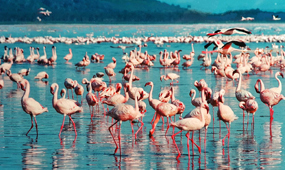
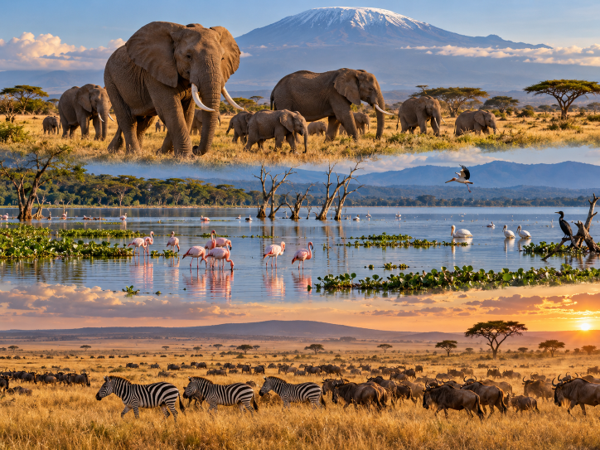
After two days in a safari vehicle, an afternoon on the water changes the pace. A boat trip can bring you close to hippos at a safe distance and provides excellent birding, including fish eagles and waterbirds around the shoreline.
Depending on arrival time and interests, you can also consider Crescent Island, Hell's Gate or simply a quiet afternoon at the lodge.
This is the one-night stop in the itinerary, and it works because the goal is not to “complete” Naivasha. It is to break the long east-to-west transfer and give the trip a different texture.

Day 4: Naivasha to the Masai Mara
After breakfast, continue toward the Masai Mara National Reserve.
The final approach is part of the transition. The landscape becomes more open, livestock and wildlife country begin to overlap, and the horizon widens.
After check-in and lunch, head out for your first Mara game drive.
Do not treat this first afternoon as the “warm-up”. The Mara can produce significant sightings within minutes, and you now have three nights, so there is no pressure to chase everything at once.
If you encounter a good lion pride or cheetah in late light, stay with it. You have two more mornings to look for everything else.
Day 5: A full Masai Mara day
This is the day we protect when designing the itinerary.
A full day in the Mara lets the guide make decisions based on wildlife rather than lodge check-in times. You can follow predator movement, explore farther from your accommodation or, during migration season, position for herd concentrations and possible river activity.
Depending on your camp location and preferences, you may leave early with a picnic breakfast and lunch, or return to camp during the heat of the day and go out again later.
There is no universally correct schedule. During migration season, staying out may make sense if herd movement is developing. On a quieter day, a long lunch and afternoon rest can make the evening drive much more enjoyable.
Travellers interested in the migration should read our Great Migration guide before choosing dates.
Day 6: Give the Mara another full day
This is the day many rushed itineraries remove, and we think that is a mistake.
Wildlife viewing improves with repetition. On day one, every giraffe is new. By day three, you start noticing behaviour: where a pride tends to rest, which river bend has been productive, how the plains change in different light and how quickly conditions can shift after rain.
A second full Mara day also gives you insurance against weather, quiet game drives or the simple fact that the animal you hoped to see did not cooperate yesterday.
Optional activities such as a balloon safari can fit here if they are important to you, but we would not overload the day with extras simply because they are available.

Day 7: Morning in the Mara, then back to Nairobi
Take one final early game drive if your departure time allows, then begin the return to Nairobi.
This is where the choice between road and air matters.
Driving gives you one more look at the Kenyan countryside and keeps the overall safari cost lower. Flying from the Mara to Nairobi saves several hours and can be valuable if you are connecting to an international flight or continuing to the coast.
Fania can arrange Mara charter services, and scheduled bush flights may also fit depending on your itinerary.
If you are flying internationally the same evening, build in a sensible connection margin. Small-aircraft schedules, weather and Nairobi traffic are all reasons not to design a connection that works only if everything runs perfectly.
Why Naivasha instead of Lake Nakuru?
This is a real choice rather than a fixed rule.
Lake Nakuru National Park is the stronger option if rhino is a major priority. It offers a conventional game-drive experience, a compact national park and a good chance to add species you may not see elsewhere.
Naivasha is the better choice if you want the week to change pace. The boat, lake environment and optional walking activities provide a break from sitting in a safari vehicle.
For a first safari, we often value that contrast.
If your wildlife wish list is strongly focused on rhino, swap Naivasha for Nakuru. The itinerary still works.
Could we start with the Mara instead?
Yes.
There is no ecological reason the route must run in this direction. Starting in the Mara can work well if accommodation availability, flight schedules or international arrival times favour it.
We like ending in the Mara because it places the richest wildlife experience at the end of the trip. You begin with elephants, slow down briefly in the Rift Valley, then finish with the largest block of game-viewing time.
It also avoids the feeling that the safari peaked on day two.
When we would change this itinerary
A good itinerary is not sacred. We would adjust it for the traveller.
If you are a serious photographer
Add a day. Fania's 8 Days Kenya Spectacular Photography Safari follows a similar Amboseli, Naivasha and Mara logic with more time for photography.
If rhino is essential
Use Nakuru or a conservancy such as Ol Pejeta/Laikipia instead of Naivasha. Fania's 7-Day Nairobi, Laikipia & Maasai Mara Safari is a strong alternative.
If you dislike long road transfers
Use flights for one or more legs. Read our road safari vs fly-in safari guide before assuming that every transfer should be flown.
If your budget is tighter
Keep the route compact. The 7 Days Classic Nairobi, Naivasha & Maasai Mara Itinerary removes Amboseli and puts more emphasis on the Rift Valley and Mara.
If you want conservancies rather than a classic circuit
The Classic Kenya Safari – 7 Days combines Ol Pejeta and the Mara, giving the trip a different conservation and wildlife focus.
What a seven-day safari should feel like
The purpose of a one-week itinerary is not to prove how much of Kenya you can cover.
It should give you enough time to stop the vehicle without wondering what you are missing at the next park.
Two mornings in Amboseli give Kilimanjaro more than one chance to appear. A night at Naivasha breaks the longest transfer. Three nights in the Mara give wildlife time to behave on its own schedule.
That is why we prefer this structure for a first visit.
Before booking, compare the route with our guide to how many days you need for a Kenya safari, check when to visit Kenya, and read what a seven-day Kenya safari really costs.
If the route is close to what you want but not exact, use Fania's tailor-made safari service. Seven days is enough time for a very good safari. The important part is deciding what not to squeeze into it.