Planning Your First Safari in Kenya
Most first Kenya safaris do not go wrong because somebody chose a bad park. Kenya has too many good ones for that. They go wrong because the itinerary tries to collect them all.
Seven days can make an excellent first safari. Seven days split between five reserves can feel like a road trip with occasional wildlife. The better starting point is not “How many parks can I fit in?” but “What do I want the trip to feel like?”
For most first-time travellers, that means enough time for unhurried game drives, at least two nights in the places that matter most, and a route that makes geographical sense. Kenya rewards travellers who leave some space in the schedule.

Start with the number of days you have
A safari “day” is not always a full day in the bush. Arrival days, airport transfers and long road journeys can consume more time than they appear on an itinerary.
If you have only three nights, choose one major wildlife area and experience it properly. The Maasai Mara National Reserve is the obvious first choice for many travellers because of its wildlife density, open landscapes and strong big-cat viewing.
With five days, two areas become realistic. Seven days gives you room for a proper circuit. At ten days or more, you can begin adding northern Kenya, conservancies or the coast without making every transfer feel urgent.
We go deeper into the trade-offs in our guide to how many days you need for a Kenya safari, but the simple rule is this: give important wildlife areas at least two nights whenever you can.
One-night stops often look efficient on paper. In practice, you may arrive after lunch, fit in one evening drive, sleep, take one morning drive and leave. That is not much time to understand a place, especially when wildlife does not operate to a timetable.
Choose parks for contrast, not just fame
Kenya's best-known parks do different jobs. A good first itinerary combines experiences rather than repeating the same one in different locations.
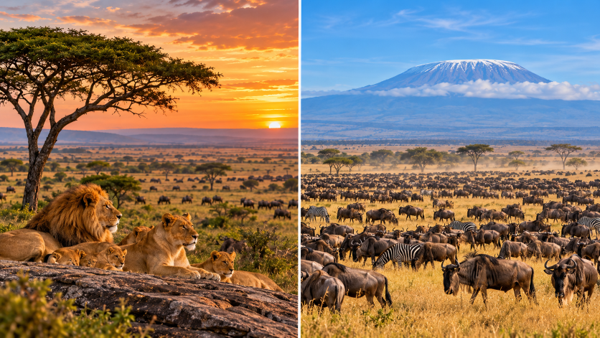
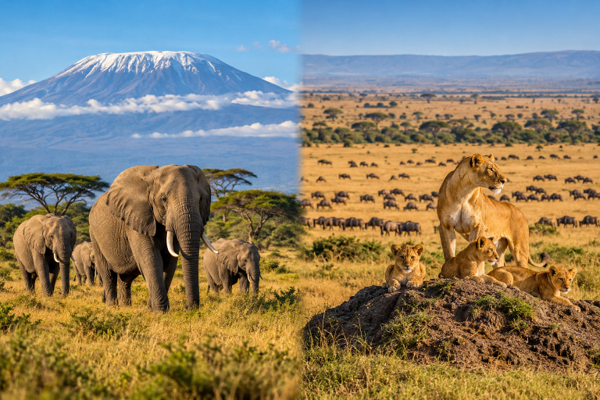
The Masai Mara is the all-rounder. If this is your first African safari and you can visit only one major reserve, it is difficult to argue against the Mara. Lions, cheetahs, elephants, buffaloes, giraffes and large numbers of plains can all be encountered here, although no sighting is guaranteed. The Great Migration adds another layer during the northern part of its annual cycle.
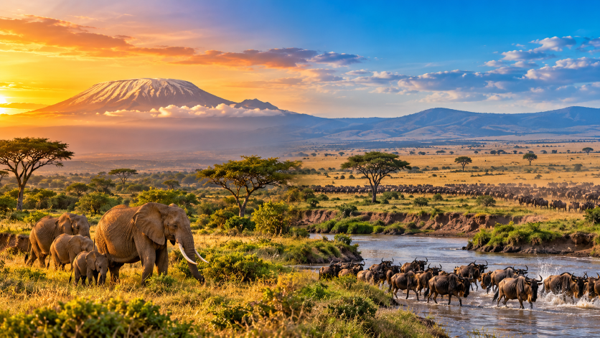
Amboseli National Park feels different. Its spring-fed wetlands, open plains and elephant herds are the headlines, with Mount Kilimanjaro forming the backdrop when cloud conditions cooperate. It is a particularly strong choice for travellers interested in elephants and photography.
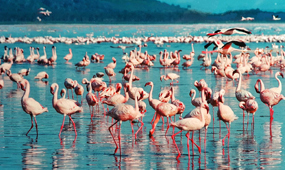
Lake Nakuru National Park adds a more compact Rift Valley experience and is an important rhino sanctuary. Lake Naivasha, by contrast, is useful when you want a break from game drives. A boat trip, birdlife and time on the water change the rhythm of the safari.
For a longer trip, Samburu National Reserve, Lewa Conservancy and other northern areas broaden the wildlife and landscape considerably. They are worth the extra time, but we would not force them into a short first visit simply to make the itinerary look more impressive.

Do not choose the season from a single wildlife photograph
The classic Kenya safari season is often described as July to October because conditions are generally dry and the Great Migration commonly reaches the Mara ecosystem during this period. It is also one of the busiest and most expensive times to travel.
That does not mean the rest of the year is a compromise.
Green-season travel can mean dramatic skies, fewer vehicles, excellent birding and lower lodge rates. January and February often bring dry conditions in many areas. November can be very rewarding between showers. Wildlife remains in Kenya year-round; what changes is where animals concentrate, how green the landscape is and how busy the reserves feel.
If the Great Migration is the main reason for your trip, read our Great Migration guide and allow more than one game drive for it. River crossings are wildlife events, not scheduled performances.
For a broader month-by-month decision, use Fania's guide to when to visit Kenya.
Decide how much road time you are comfortable with
Road travel is part of many Kenya safaris, and on the right route it adds context. You see the country changing outside the national parks: highland farms, Rift Valley escarpments, towns, grazing country and the transition into drier landscapes.
But road kilometres accumulate quickly.
A route that looks tidy on a map can still involve several long travel days. That is why a first safari should be planned as a sequence, not a collection of pins.
Flying changes the calculation. Kenya's safari air network can put you into major wildlife areas quickly, and Fania also offers charter services, including routes serving the Masai Mara and Amboseli.
Fly-in safaris cost more, but they can make sense on a short itinerary or when comfort matters more than seeing the country from the road. A hybrid trip is often the better answer: drive where the route is interesting and logical, then fly when a transfer would consume most of the day.
Our road safari vs fly-in safari guide explains where each approach works best.
Think carefully about private versus group travel
A private safari gives you control over the vehicle, guide and daily pace. That matters more than many first-time travellers expect.
If a leopard has settled into good light and you want to stay, you can stay. If you are travelling with young children, you can return camping earlier. If photography is a priority, you can spend far longer waiting for an animal to move into the right position.
Group departures reduce the cost per person and can be a good fit for solo travellers or anyone who enjoys travelling socially. The trade-off is a fixed route and shared decisions.
Neither format changes the wildlife. It changes your relationship with the day.
Read our full comparison of private and group safaris in Kenya before deciding based on price alone.
Your accommodation affects more than comfort
Safari accommodation is not simply a question of choosing budget, mid-range or luxury.
Location matters. A lodge close to a gate may reduce transfer time. A camp inside a reserve can put you near wildlife before day visitors arrive. A conservancy property may offer activities that are restricted in national parks or reserves. A beautiful lodge in the wrong place can add unnecessary driving every morning and evening.
For the first safari, we would spend less time asking how many decorative details a room has and more time asking:
• How far is it from the area we want to game drive?
• What time can we realistically leave for the morning drive?
• Are meals arranged around safari hours?
• Does the property suit children or older travellers in the group?
• If photography matters, does the location give us access to the right habitat at the right time of day?
Luxury is most valuable when it improves the safari rather than distracting from it.
Budget for the experience, not only the lodge
A Kenya safari quote combines several moving parts: accommodation, park and conservancy fees, transport, guide costs, fuel, meals and sometimes internal flights. Season and group size can change the total substantially.
This is why two seven-day safaris can have the same number of nights and very different prices.
A private vehicle is expensive for one traveller but becomes much more efficient when four people share it. Peak-season accommodation in the Mara can change the budget quickly. Adding flights saves time but adds a significant line item. Choosing five parks instead of three adds fees, fuel and transfer time as well as nights.
Use our Kenya safari cost guide before comparing quotes, and if you are working with a larger budget, our article on what a US$10,000 Kenya trip can look like shows how the trade-offs change at the upper end.
The cheapest quote is not automatically poor value, and the most expensive is not automatically better. Ask what is included and what the itinerary actually gives you time to do.

Pack for safari vehicles and small aircraft, not hotel lobbies
You need less than you think.
Neutral, comfortable clothing, layers for cool mornings, a hat, sun protection, closed shoes, binoculars and a camera are more useful than a large suitcase of safari-themed outfits. Our Kenya safari packing list covers the details.
If your itinerary includes a bush flight, luggage rules become important. Many Kenyan safari airlines use a 15 kg total allowance in soft-sided bags on standard safari routes, including hand luggage, because small aircraft have limited and irregular luggage compartments. Some routes have different allowances, so always check the airline attached to your booking.
That is worth knowing before you arrive in Nairobi with a hard-shell suitcase that cannot be loaded into the aircraft assigned to your route.
Sort out entry requirements early, then check again before departure
Kenya currently uses an Electronic Travel Authorisation system for many foreign visitors, with exemptions applying to certain travellers. Requirements can change, so use Fania's Kenya visa and entry information as a planning starting point and verify the final requirements against the official Kenya eTA system before travelling.
Your passport validity, accommodation details and onward travel information may all be relevant to the application.
Travel insurance should also be arranged well before departure. A safari takes you into remote areas where changing plans at short notice can be expensive.
The itinerary we would start from
For a first trip of around seven days, a route built around Amboseli, Lake Naivasha and the Masai Mara works well because the three stops have distinct personalities.
Amboseli gives you elephants, wetlands and Kilimanjaro. Naivasha gives you a slower Rift Valley interlude. The Mara gives you the deepest wildlife time at the end of the trip.
That is not the only good route. Fania's existing 7 Days Classic Nairobi, Naivasha, Maasai Mara Itinerary keeps the trip concentrated in Nairobi, Naivasha, Hell's Gate and the Mara, while the 7-Day Nairobi, Laikipia & Maasai Mara Safari takes a more conservancy-focused approach.
We have set out our preferred first-visit structure in The 7-Day Kenya Safari We Recommend for a First Visit.
Leave room for Kenya to surprise you
The best first safari is not the one with the longest destination list. It is the one that gives you enough time to notice what is happening around the vehicle.
A lion sleeping under an acacia may do nothing for an hour, then stand, stretch and walk directly through a herd of zebra. Elephants may remain hidden in woodland until the late afternoon. Kilimanjaro may disappear behind clouds before breakfast. A cheetah sighting may change the plan for the next two hours.
A good itinerary leaves enough room for that uncertainty. Some of the best safari hours are the ones nobody could have scheduled in advance.
If you know your dates, available days and the kind of experience you want, Fania can build the route around those priorities rather than forcing you into an itinerary that tries to do everything. Explore our Kenya destinations, browse our African safari itineraries, or start with a tailor-made safari.