There are wildlife spectacles, and then there is the Great Migration. No documentary, photograph, or story can fully prepare you for standing on the edge of the Maasai Mara as over two million animals move across the African plains in an ancient, unstoppable rhythm. If the African bush has a heartbeat, this is it.
At Fania Adventures Tours, we have guided countless guests to the front row of this extraordinary event. In this guide, we share everything you need to know — the science, the timing, the drama, and the practical details — so you can experience the Great Migration the right way.
What Is the Great Migration?
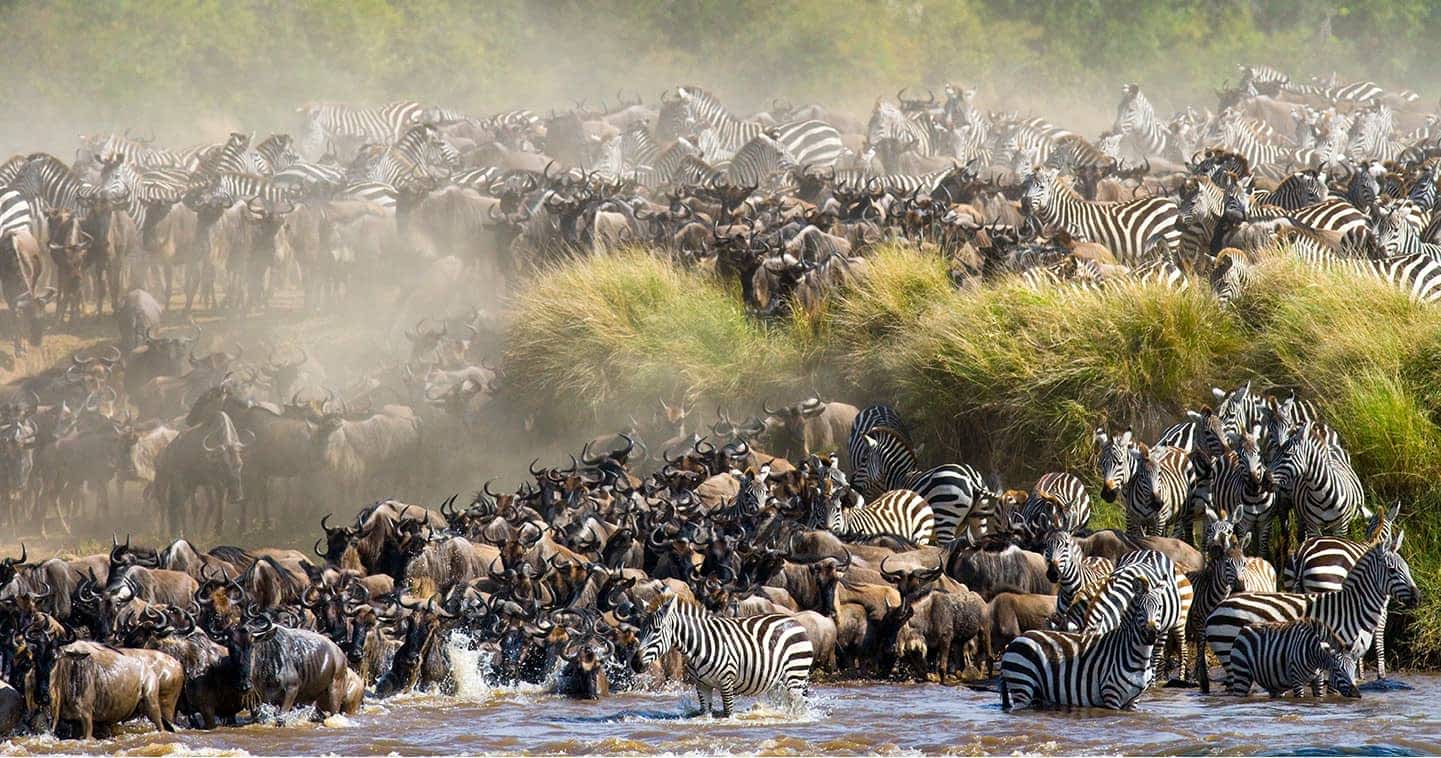
The Great Migration is the largest overland movement of animals on Earth. Every year, roughly 1.5 million wildebeest, joined by over 200,000 zebras and hundreds of thousands of gazelles, make a continuous loop across the Serengeti in Tanzania and northward into Kenya’s Maasai Mara — a circuit of approximately 1,800 miles.
This is not a migration in the conventional sense, with a fixed start and end point. It is a perpetual journey driven by one simple, ancient instinct: follow the rains, and with them, the grass. These animals are not wandering. They are following a seasonal calendar that has been etched into their DNA for hundreds of thousands of years.
The sheer scale of it defies comprehension until you witness it in person. The plains turn dark with moving bodies. The air fills with the thunder of hooves and the low, constant grunting of wildebeest. It is simultaneously overwhelming and humbling — a reminder that the natural world operates on a scale and timeline far beyond our own.

The Maasai Mara: Kenya’s Star of the Migration
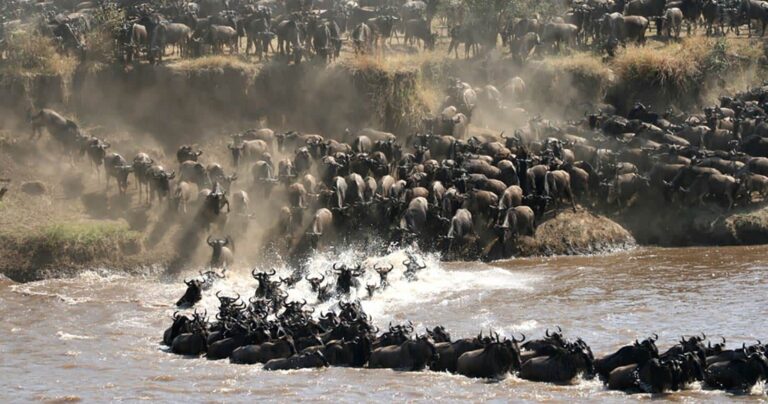
While the migration travels through both Tanzania and Kenya, the Maasai Mara holds a uniquely dramatic role. Each year, between July and October, the herds push northward into the Mara in search of its lush, rain-fed grasslands. And to get there, they must cross the Mara River.
“The Mara River crossing is not just a highlight of the migration — it is one of the most viscerally powerful wildlife events on the planet.”

The river is narrow in places and deceptively strong. Beneath its surface, enormous Nile crocodiles have waited patiently for exactly this moment. Above, on the banks, lions, cheetahs, and hyenas position themselves for the chaos that follows. When a herd finally commits to crossing — a decision that can take hours of false starts and hesitation — the result is an eruption of raw, unfiltered wildlife drama that no amount of preparation will stop from taking your breath away.
When to Go: A Season-by-Season Guide

The migration is a year-round event, but the experience changes dramatically depending on when you visit. Here is what each season offers:
- July – October (Peak Season): The herds are in the Maasai Mara. Mara River crossings are at their most frequent and dramatic. This is the period most associated with the migration and the one we most commonly recommend to first-time visitors.
- December – March (Calving Season): The herds return to the southern Serengeti, where up to 500,000 wildebeest calves are born within a matter of weeks. Predator activity is extraordinary. This is one of the most underrated safari experiences in East Africa.
- April – June (Shoulder Season): Quieter and more affordable. The Mara is lush and green. Fewer vehicles means a more intimate experience. An excellent choice for photographers and those who prefer solitude over peak-season crowds.
Beyond the Crossing: What Else to Expect
The river crossing is the iconic image of the migration, but it represents only a fraction of the full experience. Here is what awaits you on a Fania Adventures migration safari:
Predator activity is at its annual peak throughout migration season. The Maasai Mara already has one of the highest concentrations of big cats in Africa, but when the herds arrive, lions, leopards, and cheetahs are hunting daily. Game drives during this period often involve multiple predator sightings in a single morning.
The sheer density of wildlife across the open plains is, in itself, a spectacle. Standing on a kopje (rocky outcrop) and looking out over a landscape that moves in every direction — tens of thousands of animals as far as the eye can see — is an experience that stays with you long after you return home.
The sensory dimension of the migration is something rarely mentioned but never forgotten. The ground vibrates faintly underfoot during a large crossing. The air carries the earthy, distinctive smell of the herd. The sound — a low, constant percussion of hooves and calls — is unlike anything else in the natural world.

Planning Your Migration Safari with Fania Adventures
The key to a great migration experience is not just being in the right place — it is being in the right place at the right time, with the right guide. Here is what we recommend:
- Book early. Migration season accommodation in the Maasai Mara fills up months in advance. We recommend booking at least six months ahead for July – October travel.
- Choose expert guides. The migration’s movements are unpredictable. Our guides combine decades of field experience with real-time knowledge of herd movements to position you where the action is.
- Pack smart. Bring binoculars, a good camera with a zoom lens, neutral-coloured clothing, and layers. Mara mornings are cool; afternoons can be warm. Dust-proof bags are a valuable addition.
- Consider a combination itinerary. Pair your Maasai Mara migration safari with the Tanzania Serengeti, gorilla trekking in Uganda or Rwanda, or a few days unwinding on the beaches of Zanzibar or Diani. We design fully bespoke East Africa itineraries built around your interests.
One of Those Experiences You Owe Yourself
Across all the safaris we have guided, the Great Migration remains the one that moves people most deeply. Guests who have travelled to every corner of the world will stand at the edge of a river crossing and go quiet. Some cry. Most simply cannot find the words.
It is nature operating at full volume, on its own terms, completely indifferent to our presence. And somehow, that is exactly what makes it so powerful.
The Great Migration doesn’t wait. The herds will make their crossing whether you are there or not. The only question is whether you will be.
At Fania Adventures Tours, we make it our mission to ensure that when you arrive at the Maasai Mara, everything — the timing, the access, the expertise, and the comfort — is in place for the experience of a lifetime.
Ready to witness the Great Migration?
Contact Fania Adventures Tours today to start planning your tailor-made safari. Whether you are a first-time visitor or a returning guest, we will craft an itinerary that gives you the best possible seat for nature’s greatest show.