
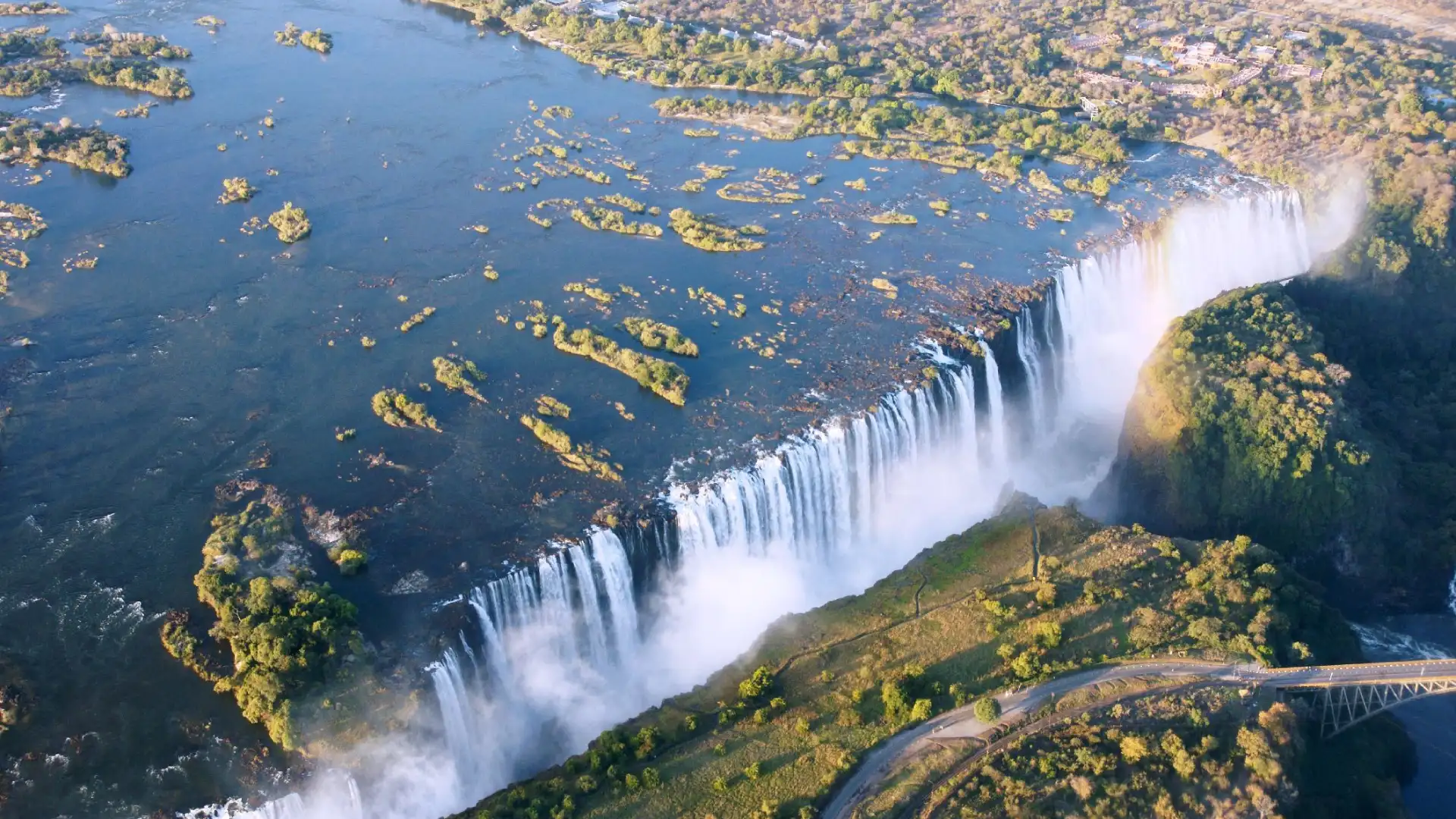


Victoria Falls: a waterfall shared by two countries
Victoria Falls, known locally as Mosi-oa-Tunya, lies on the Zambezi River between Zambia and Zimbabwe. The waterfall and its surrounding gorge system are recognized as a transboundary UNESCO World Heritage property. It is a dramatic natural landmark, but the experience is not identical from every viewpoint or at every time of year. Visitors approach the falls from Livingstone in Zambia or Victoria Falls town in Zimbabwe, and each side offers a different perspective. Planning well means considering river levels, border requirements, accessible paths and the amount of time you want to devote to the wider Zambezi landscape.
Understanding the waterfall
The Zambezi spreads across a broad lip before descending into a sequence of steep basalt gorges. The sound and spray can be extraordinary when the river carries abundant water, while lower flows expose more of the rock face and alter the appearance of different sections. Mist sustains patches of moisture-loving vegetation close to the viewpoints. The geology is part of the story: the river has cut and re-cut channels through basalt over a very long period. It is worth allowing time simply to watch the changing light and movement of water rather than rushing through a series of photographs.
The Zimbabwe viewpoints
The Zimbabwean side has a network of designated walking paths and lookouts along the gorge-facing area. Visitors can see different sections of the waterfall from multiple perspectives, depending on spray and seasonal river levels. Conditions underfoot may be wet and slippery, particularly when mist is heavy. Wear footwear with reliable grip and protect electronics from spray. Do not cross barriers for a better picture: the edges are dangerous, and paths are laid out to safeguard visitors and sensitive vegetation. Some views can be partially obscured at high water, which is part of the nature of a working river rather than a shortcoming of the destination.
The Zambia viewpoints
The Zambian side is usually reached from Livingstone and offers another angle on the falls and the river's edge. The character of the visit depends strongly on river flow, and certain viewpoints or routes may have seasonal access limitations. A visit here should be planned as its own experience rather than assumed to be an exact equivalent of the Zimbabwe side. Those hoping to see both countries should verify passport, visa and border requirements in advance, along with transport plans and operating hours. A cross-border plan can add perspective, but it is not essential to enjoying the falls if time or paperwork is limited.
How river seasons change the visit
Seasonal river levels influence almost everything: the intensity of spray, visibility of the gorge, the amount of water over particular sections and availability of some guided activities. After the rainy season upstream, water can be powerful enough for mist to obscure parts of the view. During lower-flow periods, more rock and gorge detail may be visible, and the waterfall's separate channels can be easier to distinguish. The timing and scale of these changes vary between years. Avoid promises of a particular spectacle on a fixed date. For photography, flexible scheduling and a protective layer for equipment are often more useful than trying to predict perfect conditions.
Activities around the Zambezi
The surrounding area offers guided river experiences, wildlife viewing opportunities in nearby protected landscapes and visits to local heritage and cultural attractions. Adventure products are sometimes marketed alongside the waterfall, but they are not suitable for everyone and may not operate under all conditions. Any boating, rafting or river-edge activity should be considered only with professional operators and a clear explanation of risks, restrictions and water-level decisions. Visitors seeking a gentler stay can focus on viewpoints, short walks and learning about the area's natural history. What matters is matching the experience to the traveller, not trying to fit in every advertised activity.
Planning time and getting around
Victoria Falls town and Livingstone have different lodging and transport options, so choose your base according to the overall itinerary and any border crossing you intend. The falls themselves deserve an unhurried visit, with time for weather and crowds. If combining a waterfall stop with a safari in Hwange, Chobe or another region, allow realistic transfers and confirm international entry rules where applicable. Currency arrangements, park entry policies and opening times can change; use current official information rather than historic price lists. Pack water, light rain protection for heavy spray, sun protection and comfortable walking shoes.
Conservation and respectful visiting
UNESCO recognition reflects both the scenic and geological significance of the site. Heavy visitor pressure, development and disturbance can affect its fragile riverine ecology, so remain on marked paths and dispose of waste responsibly. Do not fly drones or enter restricted zones without permission. Engage local guides and businesses that operate transparently and respect community interests. Fania Adventures can help connect Victoria Falls with a Zambia or Zimbabwe itinerary while explaining what is realistic in the season of travel. The best visit leaves room for the river to set the pace, rather than treating its changing character as an inconvenience.
