
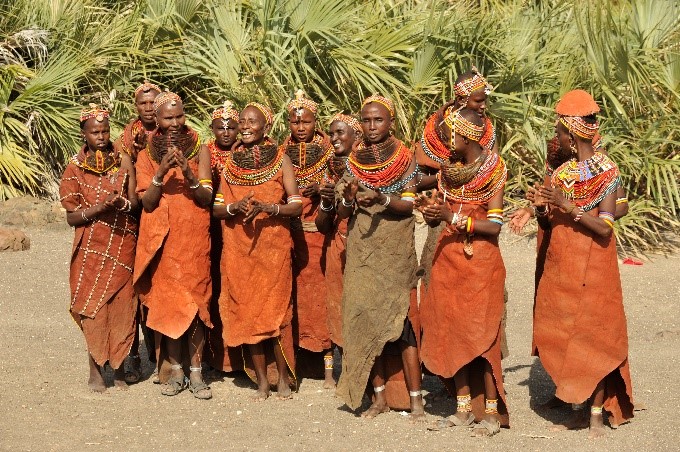
A closer look at Rendille.
Understanding Rendille heritage of the northern drylands
Rendille communities are associated with northern Kenya, particularly parts of Marsabit County. Rendille is a Cushitic language, and camel pastoralism has played a significant role in social and economic life. The community’s history includes long-standing relationships with neighbouring groups across the northern drylands.
History and cultural context
In pastoral settings, knowledge of grazing, wells, herd management and seasonal movement has long been valuable. Social institutions and ceremonies may vary across settlements and over time. Describing Rendille people only as nomads overlooks permanent settlements, schooling, trade and other contemporary forms of livelihood.
Cultural life today
Northern Kenya’s water conditions, transport connections and changing markets influence how families organise work and mobility. Rendille artistic practices, oral literature and community histories deserve documentation by people who can identify context and appropriate access.
Rendille identity and language
Rendille communities are closely associated with northern Kenya, particularly Marsabit County. Their language belongs to the Cushitic family, and camel pastoralism has played an important historical role. Relations and exchanges with neighbouring Samburu and other communities have shaped social and economic life; this should not erase Rendille distinctiveness.
Pastoral expertise in a changing region
Seasonal decisions about water, pasture and herd health involve accumulated ecological knowledge. Today these coexist with schooling, commerce, public service and new livelihood strategies. Drought, mobility and changing land governance are significant contemporary matters. A responsible visitor programme requires hosts' agreement, clear compensation and permission before photographing people or livestock.
Visiting respectfully
Travel with locally experienced guides and agree in advance what a community visit involves. Clothing and ceremony are not performances to demand. Permission for photography, payment expectations and privacy boundaries should be made clear.
Planning a respectful cultural experience
Travellers should choose experiences designed or authorised by the people involved, agree terms and photography permissions in advance, and understand that community life does not exist for visitor entertainment. The most valuable exchange is a conversation in which hosts decide what to explain. Travel arrangements, visitor access and any advertised activities must be confirmed locally before booking; this guide does not guarantee a particular cultural visit.
