
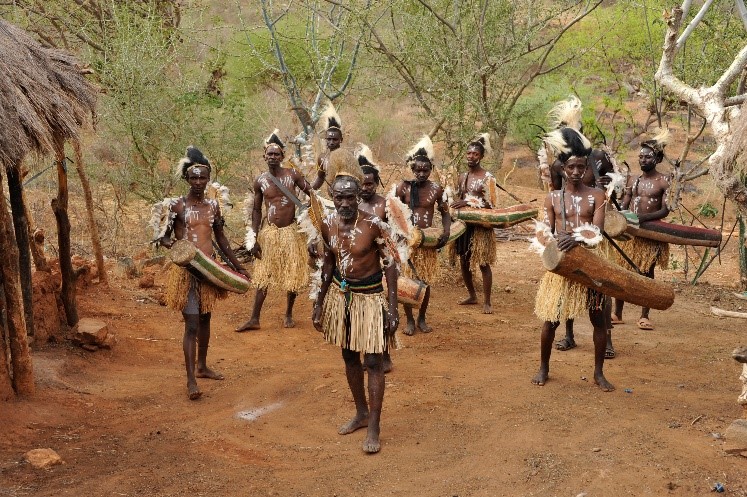
A closer look at Mbeere.
Understanding Mbeere communities east of Mount Kenya
The Mbeere are associated with eastern Kenya, especially the lower and drier parts of Embu County. They speak varieties related to neighbouring eastern Bantu languages and share some historical relationships with Embu and other communities, while maintaining their own identities and local histories.
History and cultural context
The contrast between highland and lower-altitude environments has influenced patterns of cultivation, livestock keeping and local exchange. Mbeere history is also shaped by clan relationships, oral narratives, land use and migration. Specific accounts of religious practice or initiation should be sourced carefully and, when appropriate, reviewed by community researchers.
Cultural life today
Mbeere communities participate in contemporary Kenyan education, trade, public life and agriculture. Cultural heritage can be explored through language, domestic architecture, food production, music and locally preserved stories, but none of these subjects is uniform across families or generations.
Communities of Embu and the lower highlands
Mbeere-speaking communities are associated with parts of Embu County, particularly areas extending towards Kenya's drier eastern lowlands. Historical livelihoods included agriculture adapted to differing rainfall and interactions with nearby communities. Mbeere identity should not be collapsed into a generic highland or Embu narrative; local names, places and histories matter.
Environment and cultural continuity
Water access, changing crops and movement between rural and urban areas influence how families organise their lives. Oral history can provide valuable local context, but clan histories and customary practices should be recorded with knowledgeable local collaborators before they are described as universal. Visits should focus on genuinely available markets, museums and community-hosted activities, not invented 'traditional village' products.
Visiting respectfully
For cultural visits, prioritise invitations and locally guided interpretation rather than unannounced access to homesteads. Ask before photographing people or practices. Avoid presenting dryland farming as a relic of the past; it remains part of a changing economy.
Planning a respectful cultural experience
Travellers should choose experiences designed or authorised by the people involved, agree terms and photography permissions in advance, and understand that community life does not exist for visitor entertainment. The most valuable exchange is a conversation in which hosts decide what to explain. Travel arrangements, visitor access and any advertised activities must be confirmed locally before booking; this guide does not guarantee a particular cultural visit.
